

When most people think about estate planning, they imagine creating a last will and testament. But although your will is an important part of your estate plan, it’s just the beginning.
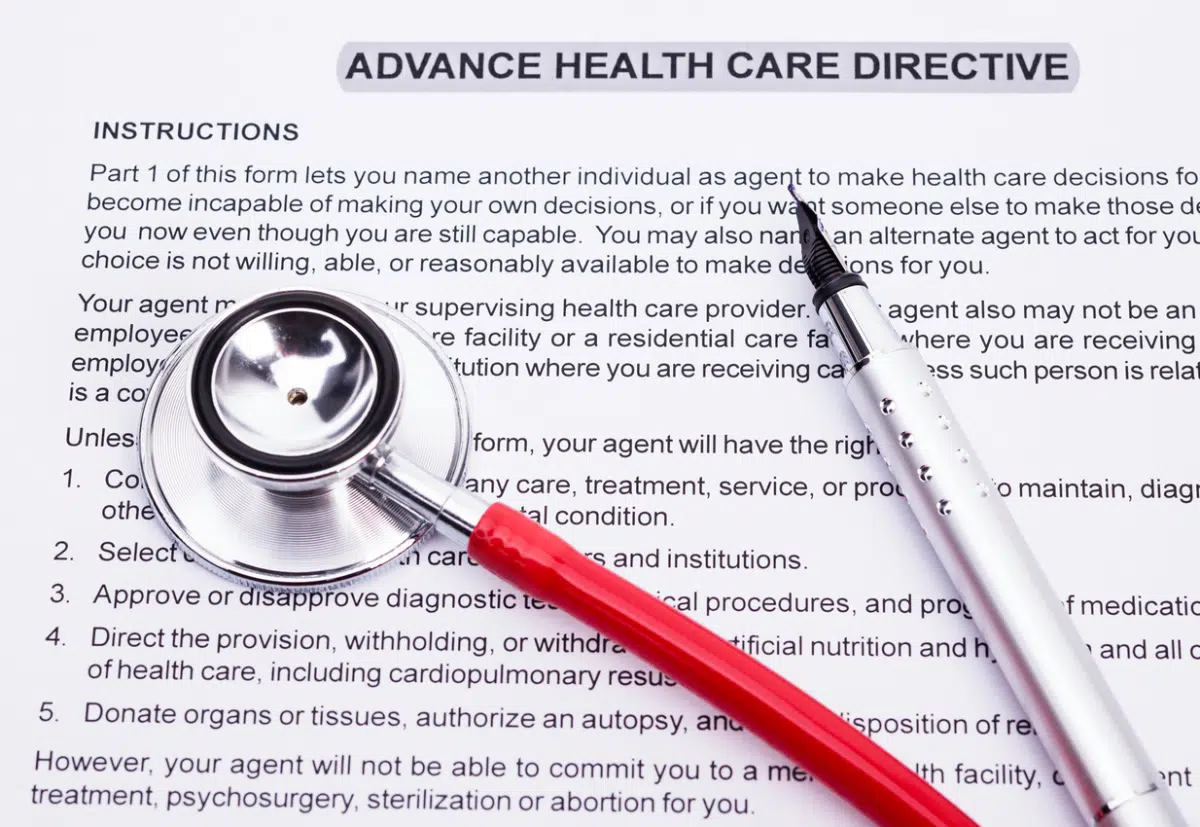
An advance health care directive allows you to take control of your future medical care, and it’s a key part of a well-rounded estate plan. In this article, we’ll take a closer look at Missouri advance health care directive requirements and guide you through the process of creating a legally valid directive.
Missouri’s Statutory Framework for Advance Health Care Directives
First, what is an advance health care directive in Missouri, exactly? This state-specific document combines two essential estate-planning documents into one:
- Living Will: Allows you to select options for end-of-life care in case you’re left unable to communicate them yourself
- Durable Power of Attorney for Health Care: Nominates a trusted person to make medical decisions for you if you become incapacitated
An advanced health care directive in Missouri law allows you to make decisions about the following:
- Whether you consent to being placed on a mechanical ventilator or other forms of life support
- Whether you consent to artificial nutrition and hydration near the end of your life
- Your preferences for end-of-life pain management
- Any preferred hospitals or other facilities
Missouri has a more narrow definition of “living will” than many states. Some states allow individuals to use this document to make statements about their medical care in general. In Missouri, living wills exclusively deal with end-of-life medical concerns.
Your living will is just one part of Missouri health care planning and estate planning. It states your preferences, but your health care agent or proxy (the person you appoint in your durable health care power of attorney) can voice them for you if need be.
The “durable” in “durable power of attorney” means the power stays in place even if you become incapacitated. There’s no need to wait to have a court declare you incompetent. If you suffer a medical emergency or are otherwise unable to communicate, your chosen agent can immediately step in to manage your medical treatment.
Notably, Missouri state law was amended in 2017 to include a provision for the creation of an Advance Health Care Directives Registry. This is a centralized registry that qualified health professionals may access. Having a centralized registry may make it easier to verify a patient’s wishes, but as of yet, such a database hasn’t been created.
It’s important to address a common misconception surrounding health care directives, which is that only people who need these tools are the elderly and seriously ill.
This isn’t true. You can suffer a serious medical episode or event at any age, and having a directive in place can give your medical team clarity while helping reduce the stress on your loved ones.
Strict Witness and Notarization Requirements Under Missouri Law
Missouri advance health care directive requirements don’t just include the contents of the directive itself. If you want your living will and health care power of attorney to be legally valid, you must follow the requirements for signing and notarization.
A Missouri advance directive is technically a combination of two documents, each of which has its own requirements for execution:
- Living Will: Must be signed and dated in front of two adult witnesses
- Durable Power of Attorney for Health Care: Must be notarized
You can’t simply sign your living will in front of any two adult witnesses. To reduce the risk of fraud and coercion, Missouri places strict requirements on who you may choose as a witness. Both of your witnesses must meet the following requirements:
- Be at least 18 years old
- Not be related to you
- Not be a beneficiary of your estate
- Not be financially responsible for your medical care
- Not be your chosen health care agent on your durable power of attorney for health care
Because most advance directive forms include both a living will and a durable power of attorney for health care, many people opt to have signatures on both documents notarized. Notarization adds an extra layer of validity, and it may help reassure your medical team and your family members that your documents are legitimate.
Legal Restrictions on Who Can Serve as Your Health Care Proxy
For many people, one of the most stressful parts of creating an advance health care directive in Missouri is selecting a health care proxy (also known as a health care agent). You should choose someone who understands and respects your wishes regarding future medical treatment.
Critically, your health care agent doesn’t have to be a medical professional. They don’t even have to be very medically knowledgeable. However, they should be able to confidently advocate for you if need be.
Medical professionals aren’t always eager to follow advance directives or listen to health care agents, so you need someone who is prepared to stand up for your rights and wishes.
Missouri law also places restrictions on who may serve as your agent. Your treating doctor or an owner, operator, or employee of the facility where you’re being treated may not be your health care proxy. However, if you’re related to that person, you may designate them.
Under the requirements for Missouri advance health care directives, you only need to name one health care agent. But what happens if that person is unable to step in when you need them to?
Most estate-planning lawyers suggest naming at least one backup health care proxy in your advance directive. If the agent you originally selected is unable to make medical decisions for you, your backup can.
A durable health care power of attorney confers an enormous amount of responsibility, so you should never name someone as your health care agent without their permission.
Also, don’t rely on your living will alone to communicate your care wishes to your agent. You should plainly discuss the medical decisions you would make in various situations so your agent can confidently make treatment decisions for you if needed.
If you’re having trouble deciding on someone to manage your medical treatment, your estate-planning lawyer can offer guidance and insight.
Distinguishing a Living Will From a Durable Power of Attorney in Missouri
Your living will and durable power of attorney are the two primary parts of your advance directive, and in many cases, they work together.
Your living will allows your voice to be heard when you otherwise can’t communicate with your medical treatment providers. In this document, you clearly outline your preferences for end-of-life care. Assuming your living will has been properly signed and executed, it’s legally binding.
Even so, it’s important to understand that in Missouri, a living will only applies to end-of-life care, not to other medical situations.
A durable power of attorney lets you nominate someone to voice your health care wishes and make medical decisions for you if you can’t do so yourself. Having a durable power of attorney for health care in place becomes especially important if you’re in a medical situation that doesn’t involve end-of-life care and are unable to communicate.
How and When a Missouri Advanced Health Care Directive Is Legally Activated
What are the legal requirements for an advance directive in Missouri to become active? Both your living will and your durable power of attorney for health care come into effect when you’re incapacitated.
In Missouri, the physician treating you will typically be the one to determine whether you’re incapacitated. You also have the option of stipulating that two physicians must determine your incapacity.
Statutory Procedures for Revoking or Updating Your Health Care Directive
Understanding how to create a Missouri advance health care directive is just part of the picture. Circumstances and relationships can change, so it’s also advisable to regularly review your documents and confirm that they’re still meeting your needs.
To that end, can you change an advance directive in Missouri? Yes; however, for the sake of clarity, it’s generally best to destroy the old document and create a new one with the relevant changes.
Revoking or Updating a Living Will
You may revoke your living will orally or in writing. If you’ve given copies of your living will to your medical providers and your health care proxy, make sure to collect and destroy them before distributing copies of the updated document.
Revoking or Updating a Health Care Power of Attorney
Under Missouri law, you may revoke a durable power of attorney for health care at any point using any manner of communication. If you tell your medical provider you want to revoke your durable power of attorney for health care, they’re legally obligated to include that revocation in your medical records.
Are Missouri Advance Directives Valid in Other States (and Vice Versa)?
State laws regarding advance directives can vary widely. However, most states generally abide by advance directives created in other states as long as those documents have been properly executed.
There are some limits, however. For instance, Missouri has some of the strongest pregnancy exceptions in the country. In many cases, Missouri physicians are barred from taking any action that might harm an unborn baby.
Navigating Missouri Restrictions Involving Pregnancy and Mental Health
Thus far, the Missouri health care directive requirements may seem fairly clear-cut. However, if you’re pregnant or dealing with mental illness, there are a few caveats in the law you should be aware of.
Restrictions Involving Pregnancy
An advance health care directive in Missouri may be disregarded if the patient is pregnant. Specifically, Missouri law states that if you’re pregnant, any wishes to withhold or withdraw medical treatment won’t be honored.
If you’re pregnant and have a durable power of attorney for health care, your agent should still be able to make most medical decisions for you. However, they’ll be bound by state laws concerning pregnancy.
Restrictions Involving Mental Illness
In some states, individuals have the option of creating something called a psychiatric advance directive. This is a document that works much like a traditional advance directive, but instead of including instructions regarding end-of-life care, it includes wishes for psychiatric treatment if the principal (the person who creates the document) experiences a mental health crisis.
Missouri doesn’t have any laws supporting psychiatric advance directives. That doesn’t mean your advance directive will be entirely unhelpful in a mental health crisis, though.
If you’re legally declared incompetent and have a durable power of attorney for health care in place, your health care agent should be able to make decisions for you regarding medication and hospitalization.
Just be aware that your agent may not have decision-making authority in all situations. If you’re deemed a danger to yourself or others under Missouri law, you could be involuntarily committed to a psychiatric institution even if your agent doesn’t grant permission.
Mandated Provider Obligations and Proper Document Distribution
It’s important to understand Missouri’s advance directive legal requirements so you can ensure that your documents are properly executed under state law. However, if your medical providers and health care agent are unaware of your advance directive or don’t know how to find it, your wishes for medical treatment may not be honored after all.
To avoid problems in the future and make sure all relevant parties know about your directive, follow these general guidelines for distributing your documents:
- Give a copy to your chosen health care agent
- Give copies to any backup health care agents you’ve chosen
- Deliver a signed copy to your primary care physician’s office
- If you’re admitted to a hospital or other care facility, bring a copy of the directive so it can be added to your chart
- Keep copies for yourself in a safe and secure (but still easily accessible) location
- If Missouri does create a statewide electronic registry in the future, make use of this option, too
You and your health care agent should also understand medical providers’ obligations under the law. They include the following.
Presuming That the Document Is Valid
Your medical team wasn’t there when you signed and notarized your advance directive. However, the law requires them to assume that you were competent when you created the document and that it was executed correctly unless proven otherwise.
Honoring the Document as Written
Once you become incapacitated, your treating physicians must adhere to your living will as written. They must also accept your health care agent’s authority to make decisions on your behalf.
Noting the Advance Directive in Your Record
If you become unable to make medical decisions for yourself and your advance directive goes into effect, your provider must make a note of this in your medical record.
Transferring You if They Can’t Fulfill Your Wishes
In some cases, a treating physician may have a religious or conscientious objection to carrying out one or more of the wishes you’ve expressed in your advance directive. If this happens, they have a legal obligation to transfer you to a provider or facility that will follow your directive.
Non-Discrimination
Health care providers are legally barred from discriminating against patients based on whether they’ve executed an advance directive or not.
Following State Law
Medical providers generally must follow the instructions laid out in advance directives, but they may not violate the law when doing so. For instance, if a pregnant patient has decided against artificial nutrition or hydration, a Missouri medical provider is not legally allowed to follow that wish.
Need Help Understanding Missouri Advance Health Care Directive Requirements?
Missouri advance directive laws can be confusing, and when you’re creating a health care directive, the stakes are enormously high. If you make a mistake, the document may be declared legally invalid. However, by the time anyone realizes, you may already be unable to communicate.
At The Law Office of David S. Schleiffarth, LLC, we believe that proactive estate planning is a vital aspect of living at peace. We’re dedicated to helping individuals and families in Missouri build customized estate plans to protect their wealth and pass it on to the next generation.
If you’re looking to update your advance directive or create one for the first time, we’re here to show you the way. Contact us today to schedule a consultation.


